
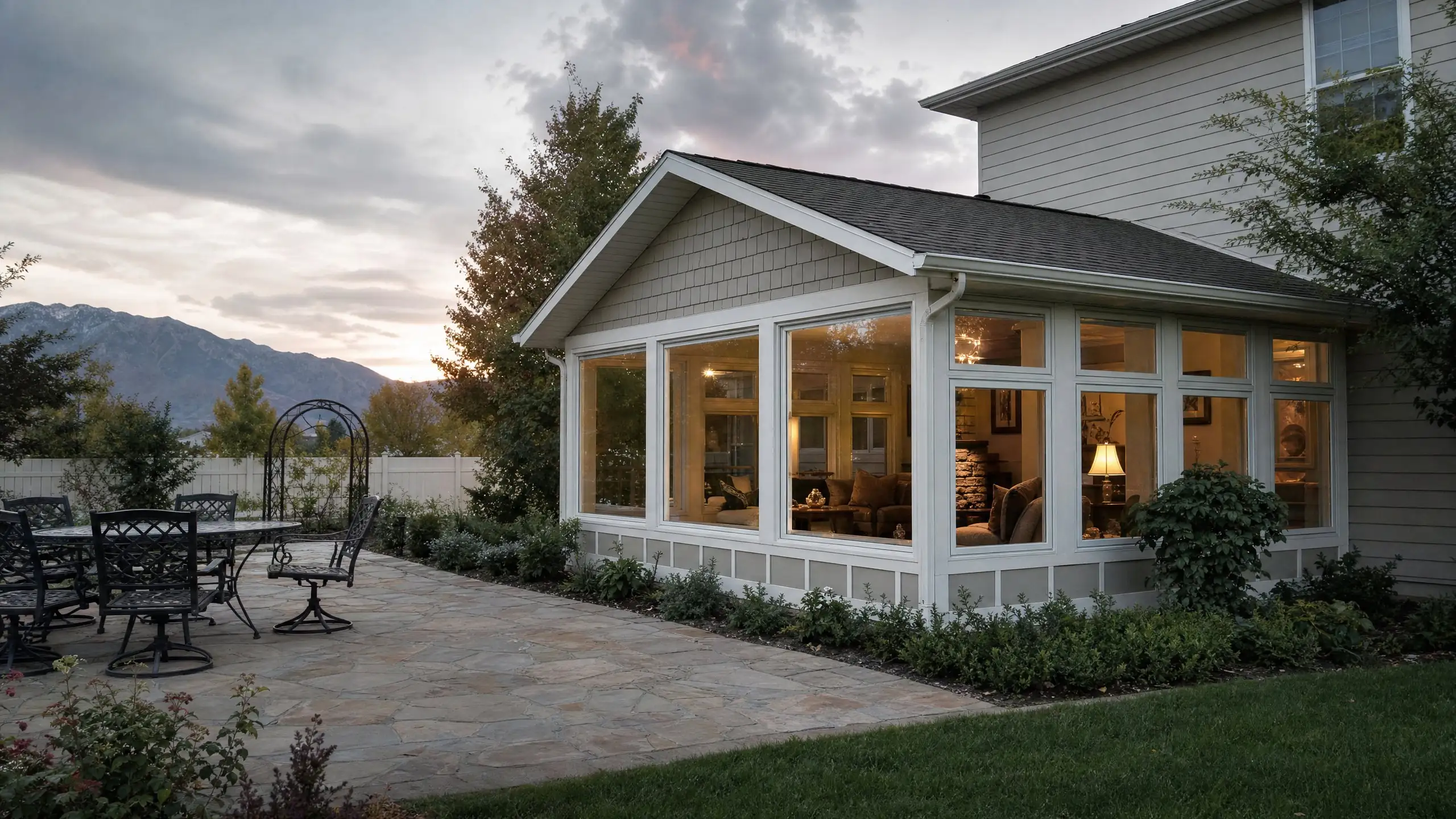
Sunroom additions
Sunroom Additions Built as Real Rooms
A room full of light, open to the yard and the mountains. The difference between a sunroom you use every day and one you avoid half the year comes down to glass, roof and comfort.
What we mean by a sunroom
A sunroom is a room with a large share of its walls in windows, designed to bring the outdoors in. The term covers everything from an enclosed patio to a fully insulated living room with tall windows. We build sunrooms as part of the house, on a proper foundation with a roof that belongs to the home, rather than as a kit attached to the back.
Four-season or three-season
Four-season room
Heated and cooled living space
- Usable in January and July
- Insulated walls and roof, high-performance windows
- Can open directly to the house
- Meets energy requirements as conditioned space
Three-season room
Protected, not conditioned
- Comfortable spring through fall
- Separated from the house by an exterior door
- Lower cost to build
- Too cold for Utah winters without heat
With cold winters and hot summers along the Wasatch Front, most homeowners who want year-round use choose a four-season room. If you mostly want a screened, sheltered place for summer evenings, a three-season room or covered patio may serve better.
Glass and comfort
Glass is the point of a sunroom and its main challenge. Windows lose more heat in winter and gain more in summer than insulated walls. A few decisions balance light with comfort:
- OrientationNorth light is soft and even; south and west bring heat. Shading changes the picture.
- Window selectionLow-emissivity coatings and good frames matter more in a sunroom than any other room.
- Solid roofAn insulated roof with skylights or clerestory windows stays far more comfortable than a glass roof.
- OverhangsRoof overhangs block high summer sun while letting low winter sun in.
- Heating and coolingSized for the glass area, often as a separate zone or dedicated unit.
A roof that belongs to the house
Sunrooms usually sit at the back of the house, often where the patio was. The roof can extend the main roof plane, form a gable that matches the house, or use a lower shed roof. Kit-style translucent panels and aluminum framing are what make many sunrooms look added on. See addition rooflines for the options.
Foundation and floor
A four-season room needs the same foundation as any addition, with footings below frost depth. Matching the existing floor height lets the sunroom open to the house without a step. Converting an existing patio slab is sometimes possible, but most patios were not built as foundations and need to be evaluated or replaced. See addition foundations.
What shapes the cost
Glass is expensive, so window area and quality drive a sunroom budget more than most additions. Other factors are the foundation, the roof design, heating and cooling, flooring and the opening into the house. A three-season room costs less than a four-season room of the same size. The home addition cost guide explains how we estimate.
A sunroom is a type of room addition, and many homeowners compare it with a family room addition. We build sunrooms for homes in Bountiful and across Davis County.
Sunroom questions
What is the difference between a three-season and a four-season room?
A three-season room is not heated or cooled as part of the house and is usually separated from it by an exterior door. It is pleasant in spring, summer and fall. A four-season room is heated and cooled living space, built with insulated walls, roof and high-performance glass so it stays usable year-round. Four-season rooms cost more and are treated as conditioned space in permit review.
Is a sunroom kit cheaper than a built addition?
The kit itself may be, but foundation, permits, electrical, heating and the connection to the house still have to be built. Kits also tend to look added on, with aluminum framing and roof panels that do not match the house. A built room costs more but looks and performs like part of the home.
Will a sunroom be too hot in summer?
It can be, especially facing west or south with lots of unshaded glass. Window selection, roof overhangs, a solid insulated roof instead of glass, shades and a heating and cooling plan keep it comfortable. These choices are made during design, not after.
Plan a sunroom you will use all year
Tell us about the house, the yard and how you picture the room.